The mask economy
Originally written in Chinese. Translated with AI, reviewed by Gary. Read the Chinese original →
During the pandemic years, face masks were probably one of the most classic boom businesses.
An ordinary consumer product suddenly became something everyone needed every day. Lots of mask brands sprang up in Malaysia then, and two left a particularly strong impression on me: Neutrovis and Iconic Medicare.
Two mask brands that broke out
Neutrovis was probably one of the most successful consumer brands of that period. According to reports at the time, the business grew from about RM6 million in revenue in 2019 to more than RM200 million by 2021. Product quality, packaging design, branding and distribution were all very well done. You could find it in every major pharmacy and shopping mall, and brand awareness was very high.
The other, Iconic Medicare, came from a property developer background and moved heavily into masks and medical gloves during the pandemic. Its product quality was good too, its marketing, campaigns and channels were very active, and it invested in sizeable production facilities.
Both companies grew remarkably during the pandemic.
If you put yourself back in that situation, what would you have done?
Demand was huge, customers were rushing to buy, and channels were eager for stock. Of course you'd make the product better, improve the packaging, step up marketing, expand distribution, look after your customers, and even invest in more capacity.
From where they stood then, none of this was wrong, and much of it was exactly what they should have done.
After demand went out
But here's the problem.
After the pandemic, masks were no longer something you had to buy every day. Demand fell sharply, and the original business model began to face very big challenges.
I recently looked at both companies' financial results. After the pandemic, one lost tens of millions in a single financial year, and the other more than a hundred million. Of course, part of the losses involved other businesses and asset impairments, but the scale is still striking.
What's most worth thinking about: were their branding, marketing, product, distribution and supply chain capabilities not good?
They were actually all very good. That they broke out from so many competitors back then is proof of those capabilities.
But when customers no longer need to buy masks in large quantities, no matter how good your product, how strong your channels or how brilliant your marketing, it's very hard to change the fact that the whole market's demand has fallen.
That's what I've always believed you need to see clearly first in business.
Customer demand always comes first.
Marketing can amplify demand, branding can help customers choose you, and a good product can bring repeat purchases. But none of these can replace the market's own demand over the long term.
The haze came back, and so did they
So why talk about the mask economy today?
Because of Malaysia's haze recently, I've been paying attention to the consumer health and healthcare market.
Then I happened to see Shopee's 10.10 Brands Festival best-selling brands list, and found it very interesting.
In the Health & Wellness category, Neutrovis was No. 2 and Iconic Medicare was No. 5.
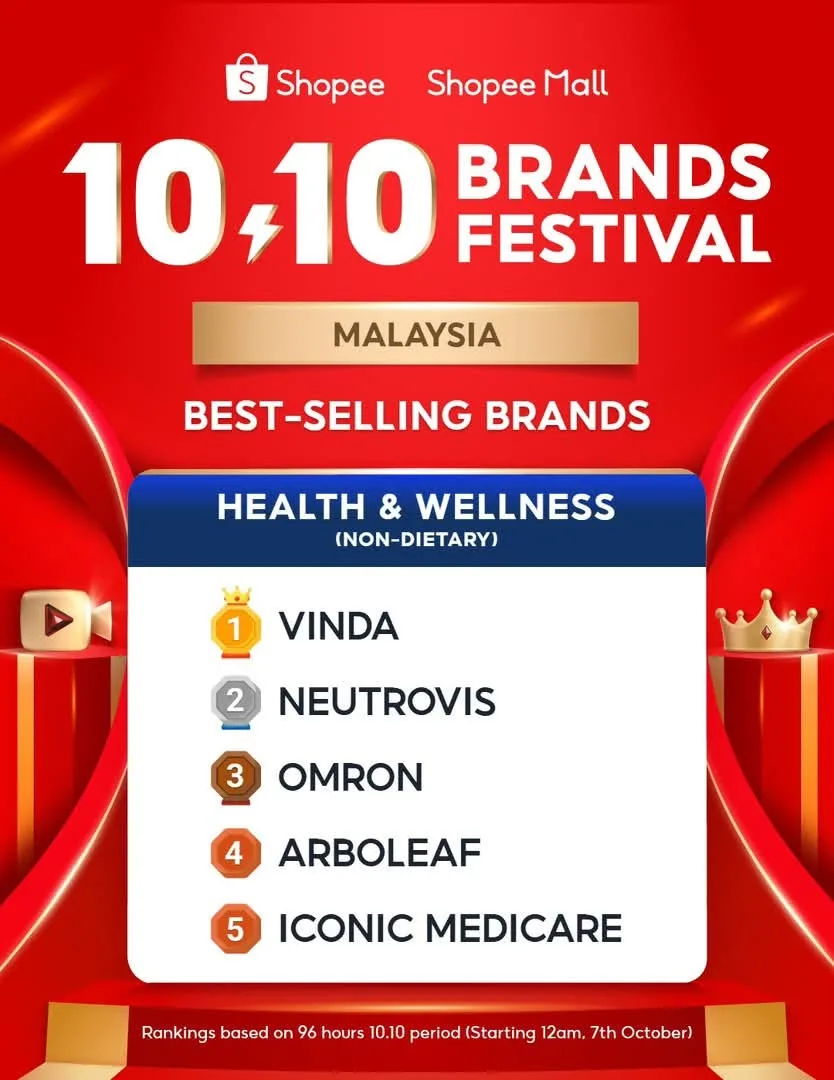
Two old competitors, through rapid growth during the pandemic and the tide going out afterwards, now appear together again on the same best-seller list. Truly companions in misfortune. 😂
When the market started paying attention to masks again, both brands could still make the list, which at least shows the brand foundations they built haven't completely disappeared.
That's the value of branding.
When customers have a need, they tend to choose brands they know and trust first. The work built up over the years in product, channels and marketing can still pay off when demand comes back.
You still need to build the brand, still invest in marketing, and still get product and channels right.
We just can't forget that all of these capabilities rest on one condition.
Brand decides who customers choose first. Market demand decides whether they buy at all.