Super El Niño: is this haze a natural disaster or a man-made one?
Originally written in Chinese. Translated with AI, reviewed by Gary. Read the Chinese original →
This morning I watched a BBC News video and learned that there's an extreme climate phenomenon called a Super El Niño.
About 150 years ago, an extreme climate event was linked to the deaths of more than 50 million people around the world.
After reading up on it, I found that the 2026 El Niño we're living through now could also develop into a very strong climate event. According to the World Meteorological Organization (WMO), this El Niño is expected to peak around the end of this year, and its effects may last into 2027.
What is El Niño?
Put simply, under normal conditions the Pacific trade winds push warm water towards Indonesia and Australia, bringing more cloud and rain to those areas.
But when El Niño happens, the trade winds weaken and the warm water moves towards the central and eastern Pacific, changing weather patterns around the world.
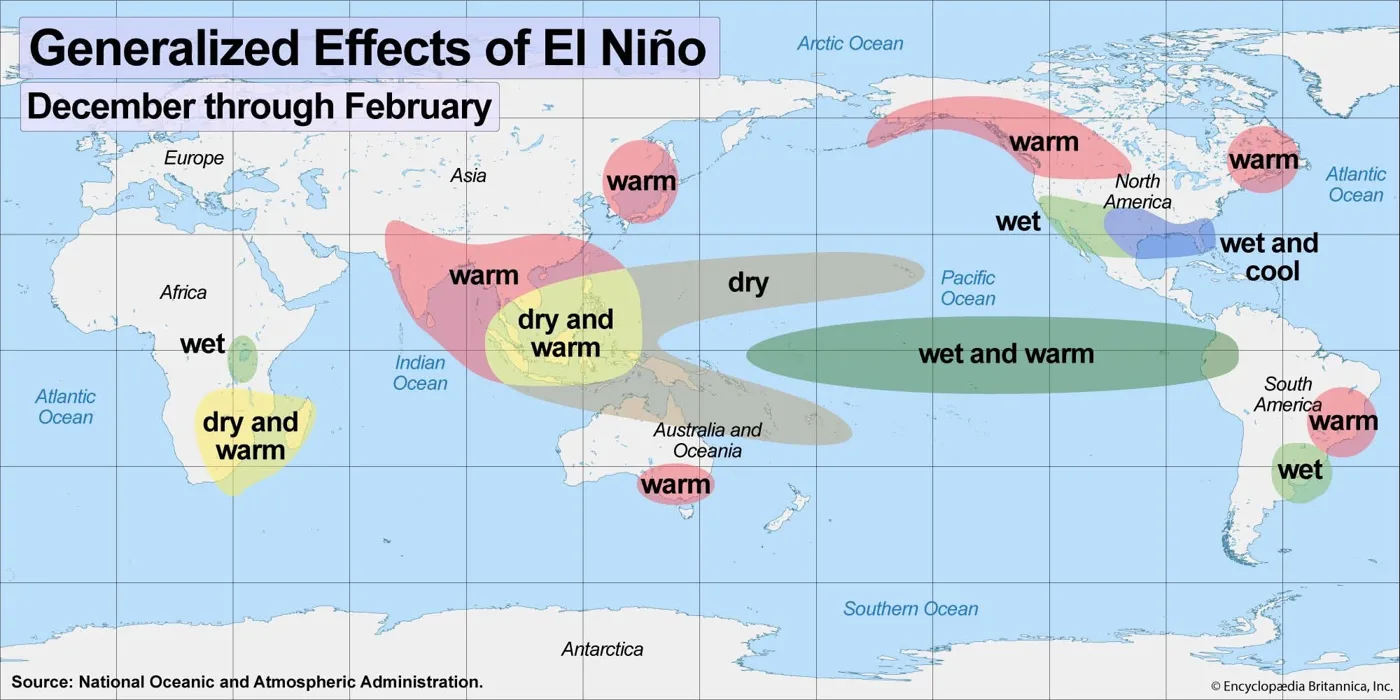
Parts of Malaysia, Indonesia and Australia may see heat and drought; parts of South America may get unusually heavy rain and floods; monsoons and farming in parts of India and Africa may also be affected.
It doesn't make the whole world hotter or drier at the same time. It changes where the rain falls. Some places suffer severe drought, while others flood.
The disaster 150 years ago
From 1876 to 1878, the world went through a very severe climate disaster.
India, northern China, Brazil and several parts of Africa were all hit by severe drought at the same time. Harvests failed on a huge scale, prices soared, and famine and disease followed. Later historical and climate research estimates the related deaths at more than 50 million.
Of course, these people didn't die only because of El Niño. Colonial policy, food distribution, inequality, transport and relief systems at the time all made the disaster much worse.
The climate anomaly was an important trigger, but not the only cause.
Malaysia's haze in 2026
Back to 2026: what will this Super El Niño mean for us?
Leaving other countries aside, let's talk about Malaysia.
What we feel most directly is the haze, which has been getting worse lately.
Beyond that, a long drought could also affect reservoir levels, farming, food supply and prices, and in turn economic activity.
One of the main sources of this haze is forest and peatland fires in Sumatra and Kalimantan in Indonesia. The long drought, combined with the wind direction, has carried huge amounts of smoke to Malaysia and Singapore.
But here's the question.
Are Indonesia's forest fires a natural disaster, or a man-made one?
From what I read, these large-scale fires in Indonesia are mainly linked to human activity.
One long-standing problem is slash-and-burn land clearing for farming.
For some farmers or land developers, burning away weeds, trees and vegetation is much cheaper than clearing land with machines. Oil palm, pulpwood plantations and other land development may also involve this practice.
Not every fire is deliberately set, but land clearing, agricultural burning and other human sources of fire have long been major causes of Indonesia's forest fires.
And the prolonged heat and drought brought by El Niño turn small fires that might otherwise be controlled into huge forest fires.
Peatland that keeps burning underground
Even more troublesome is Indonesia's peatland.
Peat is organic soil formed from plants decomposing and piling up over thousands of years. Normally it holds a lot of water and doesn't burn easily.
But in the past, to develop farms and plantations, some peatland was drained with canals, lowering the water table. Add a long drought, and peat that was once wet becomes extremely flammable.
Once it catches fire, it isn't only the trees above ground that burn; the peat below keeps smouldering. Some fires can burn underground for weeks or even months. On the surface it looks put out, but underneath it's still burning.
That's why, even though Indonesia has thrown huge numbers of people, aircraft and resources at it, the fires are still very hard to control.
So is this a natural disaster or a man-made one?
El Niño is a natural phenomenon, and humans can't stop it from happening. But how land is developed, how forests are managed, whether peatland should be drained, and whether companies can use fire to clear land to save costs: those are all human decisions.
And this isn't the first time we've had haze.
In 1997 and 2015, Southeast Asia went through very severe transboundary haze. Every time, we talk about how to put out the fires, when it will rain, and when the wind will change.
When the rainy season comes and the haze clears, everyone slowly goes back to normal life.
A few years later, it happens again.
What really needs solving isn't only how to put out the fires, but how to reduce fires at the source.
For example, enforcing the ban on illegal burning more strictly, giving land developers other ways to clear land, keeping peatland water tables high, using satellites to monitor hotspots, and building clearer corporate accountability and cross-border enforcement.
These measures may not stop forest fires completely, but at least they can reduce the chances of fires starting, and stop small fires from turning into uncontrollable ones.
Running a business is the same
Looking back at the disaster 150 years ago that took tens of millions of lives.
People then had none of today's satellites, weather forecasting, farming technology, or modern transport and supply chains.
150 years later, we can forecast extreme weather months ahead, and know which areas may face drought and where the fire risk is.
If we know these things might happen, why do we still wait for disaster before dealing with them?
Running a business is actually the same.
Economic downturns, shifts in demand, platforms raising fees, rising supply chain costs: much of the time we simply can't control these external factors.
But we can control our own inventory, cash flow, cost structure and internal systems.
If you know the market may slow down, you should control inventory and spending early, not wait until sales crash and cash flow runs into trouble before looking for a way out.
If you know a business model carries risk, you should build systems to limit the losses, not wait until the problem happens to fix it.
It's the same logic as the forest fires.
We can't stop El Niño, but through land management, regulation and prevention, we can reduce the chance and severity of fires.
Not being able to control the environment doesn't mean there's nothing we can do.
150 years ago, we didn't have the technology to predict these disasters in advance.
150 years later, we can already see where the risks are.
But knowing the risk and actually being prepared are two different things.
If we know a problem may happen and don't act in advance, only scrambling to fix it once disaster strikes, then it isn't only a natural disaster any more.