Cixi didn't eat the Qing dynasty to death
Originally written in Chinese. Translated with AI, reviewed by Gary. Read the Chinese original →
Today I went to the Summer Palace.
Walking into the rooms where Empress Dowager Cixi once lived, my first feeling wasn't awe. It was a subtle sense of distance. What struck me wasn't the grand narrative of the history books, but some very everyday, very unusual details.
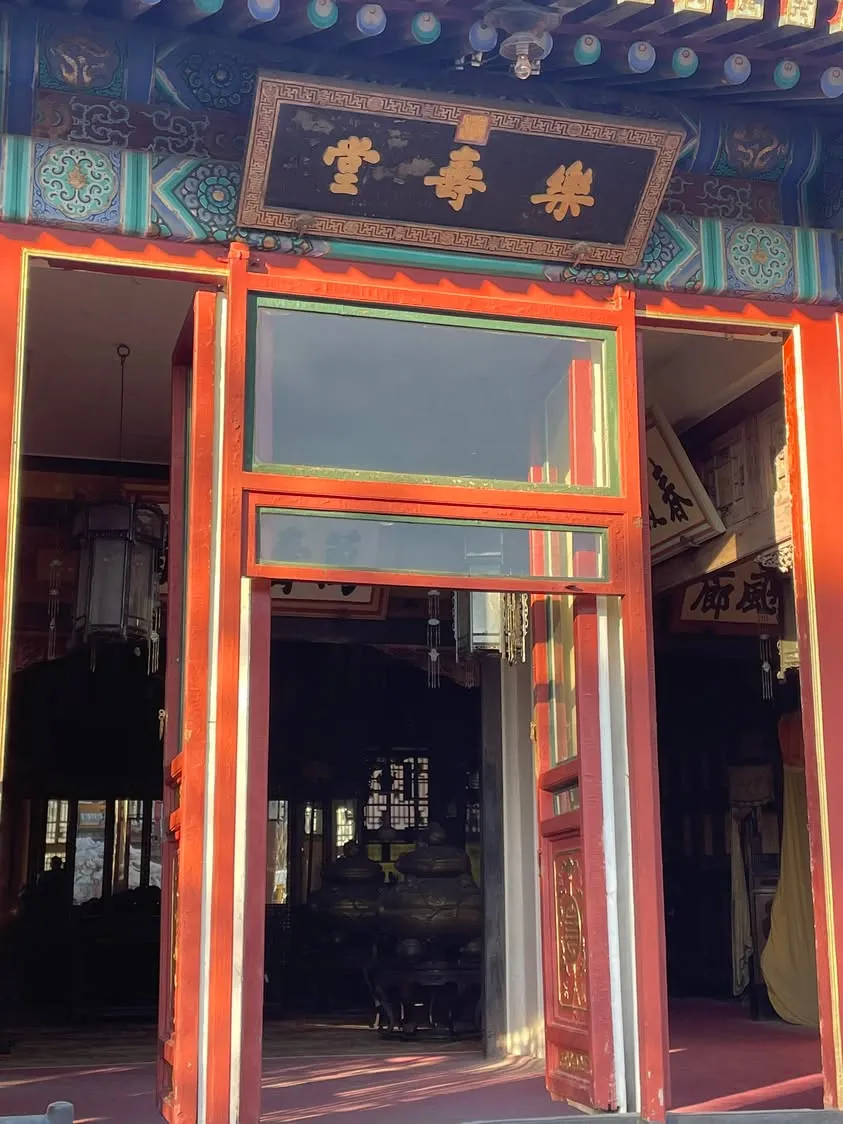
Our guide, a friend, pointed at three vessels in the hall and said they weren't for incense. They were for apples.
The apples weren't for eating. Cixi liked the smell they gave off. While they were fresh, they stayed there; once the scent faded, they were thrown out. A hundred thousand apples a year, and back then it was perfectly normal.
In that moment, the familiar labels, "extravagant", "incompetent", didn't come to mind. Instead I was thinking about something more practical: when a system no longer pays any psychological cost for waste, it has already lost touch with the real world.
Then we talked about her meals. Each one meant preparing 108 dishes, most taken away after a few bites. Not because she ate little, but because the ritual itself had to be complete. Scale was part of the order.
This was no longer a matter of personal habit. It was a whole system using form, specification and spectacle to keep proving to itself: we are still an empire.
Technology could enter the palace, but not the structure
What's interesting is that Cixi wasn't against new things.
She rode in a car, used electric lights and sent telegrams. She knew the world was changing and had seen the convenience technology brought with her own eyes. So the problem wasn't that she "couldn't see the future".
The real problem was that she let technology into her life, but never into the structure. Machines could enter the palace, tools could be used, but the institutions couldn't move, and the underlying logic of power couldn't be rebuilt.
As I wrote this, the scene suddenly felt very familiar.
Isn't this exactly where we are with AI today?
Almost every boss now understands AI. Everyone knows generative AI and what the tools can do. Outfit swaps, generated images, product shots, video editing, copywriting, number crunching. They can talk about it at length, and many bosses are even more excited than their staff.
But in the end, what is all this AI used for?
Raising efficiency, polishing content, cutting costs, making the existing system run a little faster.
Just like Cixi with her electric lights and her car. The technology came in, the experience got better, but the underlying structure didn't move an inch.
The real dividing line was never "can you use AI", but "do you dare let AI change the organisation itself".
For example, a boss knows AI can generate model shots and outfit swaps in a second, but selecting styles, pricing and listing still follow the old process: report up layer by layer, then wait for one person to nod. AI becomes a drawing tool with no decision rights at all.
Or: AI can already analyse data, predict conversion and suggest content direction, but the people who make the call are still the few most afraid of making mistakes. So AI can only "suggest", never "take part in deciding". Efficiency goes up, but no evolution happens.
AI can help me, but it can't change me
The deeper problem is one many people understand but don't like to say out loud: if AI really starts making decisions, allocating resources and running the organisation, will my old position still be there?
So subconsciously, a line gets drawn:
AI can help me, but it can't change me.
That's almost the same logic as Cixi's choice back then.
It wasn't that she didn't know the Qing needed to change. She didn't dare bet on whether, after the change, the power structure would spin out of control and whether she could still stand. So she chose stability: stable order, stable structure, the dignity of her generation kept intact.
History's punishment for "stability" rarely arrives immediately. It takes effect later.
Many companies today are standing where Cixi stood. We're not against AI, we're willing to spend on it, we even use it every day. But the moment AI starts touching organisational structure, decision-making and the distribution of power, we instinctively hit the brakes.
Not because we don't understand it, but because we don't dare touch the foundations.
The scent of apples fades. Ritual can hold things together for a while. AI tools can make you look advanced in the short term. But if the system itself doesn't update, even the most exquisite old world is only buying time.
The Summer Palace is beautiful, but what it showed me wasn't a golden age. It was the cost of refusing to evolve.
Cixi didn't eat the Qing dynasty to death.
She used an old world that looked stable and was extremely refined to block the new world's last chance to come through the door.