400 首新年歌,不是泛滥,是预算在迁移
English summary available ↓
Malaysia had roughly 400 new Chinese New Year songs this year. Without a paying client, how many people would fund a CNY music video themselves? A decent one can cost six figures. To see why it's worth it, stand in the brand's shoes. Take a fast-moving consumer brand doing, say, RM200 million a year in Malaysia: 10 percent for marketing is RM20 million that must be spent. If a brand stops showing up, consumers forget, distributors lose confidence and competitors take the shelf. Marketing is a cost of staying relevant. The media just changed: newspapers, magazines and TV impressions are falling, and the money moved to social media. A highway billboard can cost RM40k to RM60k a month and disappears when the contract ends, while a creative CNY song that reaches a million views can keep circulating for ten years. It's a content asset with a long tail, not just an ad. On the creator side, the same influencers appeared in several songs this year, and many had a fat year. Zoom out further: Astro's market value is around RM391 million, close to new-media company Foodie's, because markets price the future of attention. A practical tip: if you want into this space next year, FMCG brands are the easiest clients, with steady budgets and constant need for new exposure. This year's songs are a signal that brand budgets are migrating into content assets, and it has only just begun.
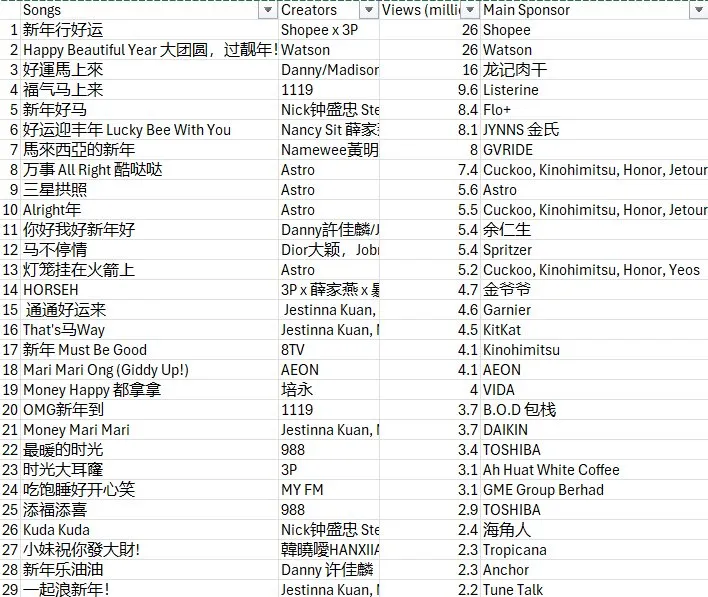
Read full English version →今年马来西亚大概出现了 400 首新年歌。
你是不是觉得已经泛滥了?
但如果你稍微换一个角度看,这件事,其实很有趣。
你有没有认真想过一个问题:如果没有「甲方爸爸」,到底有多少人会自掏腰包去拍一首新年歌 MV?我身边有做内容的朋友,一支像样的新年歌制作费,动不动就是六位数。很多人听到这个数字会皱眉:花六位数拍一首新年歌,真的值得吗?
站在甲方的角度
答案,其实要站在甲方的角度看。
以快消品牌为例,假设像 Listerine 在马来西亚一年做到大约 RM200 million 的生意,如果拿出 10% 做 marketing,一年就是 RM20 million 的预算。这笔钱不是「想不想花」,而是一定要花。品牌如果停止曝光,消费者很快就会遗忘,经销商的信心也会开始动摇,货架位置甚至会被竞争对手慢慢吃掉。
Marketing 从来不只是锦上添花,更是一种「存在税」(cost of staying relevant)。
只是媒介在变。以前品牌买的是报纸、杂志、电视,但今天这些渠道的 impression 在肉眼可见地下滑。预算没有消失,它只是迁移到了社交媒体。
很多人觉得六位数拍一支 YouTube 新年歌很贵,但如果你对比一下高速公路 billboard,一个月 RM40k 到 RM60k,一上几条 highway,很快就是六位数,而且时间一到,广告直接消失。
但一首有创意的新年歌,如果跑出百万观看,它的生命周期可能是十年起跳。2026 年在传播,2030 年还有人重播,甚至 2036 年还会被翻出来听。这本质上已经不是广告,而是一个带长尾效应的内容资产。
所以你会发现,今年品牌特别愿意押注 YouTube 新年歌和网红 MV,而不是只做短视频。短视频是流量,但新年歌,是可以沉淀的记忆点。
乙方的肥年
再看乙方这边,其实就更有意思了。
当预算在找出口,正值拼搏年纪的创作者,自然会全力参与。你会看到一个很明显的现象:培永、3P、Jestinna Kuan family、Danny 许佳麟,几乎在 2026 年同时出现在不同的新年歌里。
某种程度上说,今年不少网红确实过了一个「肥年」。
品牌在抢曝光,创作者在收割制作费,平台在吃流量红利。表面上看是新年歌变多了,本质上是 marketing budget 在重排。
如果再把镜头拉远一点,你会更有感觉。
最近 Astro 的市值大约来到 RM391 million,而对标的新媒体公司 Foodie 也在 RM390 million 左右。如果只看过去的资产,Astro 未必输,但资本市场从来不只看历史,它更看未来的注意力分配方式。
而网红传播这条路,说实话,想象力还远远没有被完全打开。这也是为什么市场愿意给新媒体更高的预期。
一个实操的观察
最后给一个很实操的观察。
如果你明年想切入「网红新年歌」这条赛道,最容易切进去的甲方,其实很明确:快消品牌。因为他们必须持续投放,通路压力大,而且年度 marketing budget 相对稳定。只要你的内容有记忆点、渠道够广,他们永远在找新的曝光出口。
所以,今年的新年歌不是泛滥。
它更像是一个信号:品牌预算,正在系统性迁移到内容资产。
而这件事,才刚刚开始。