Why couldn't I make it work, no matter how hard I tried?
Originally written in Chinese. Translated with AI, reviewed by Gary. Read the Chinese original →
When I first started in retail, I always thought that if others could do it, of course I could too.
Especially since we had a supply chain advantage.
I knew the product. I knew the production cost, what the selling price should be, and how much we could make in between. All of that was clear to me.
So I thought running retail stores couldn't be that hard.
We started opening stores, moved into shopping malls, and slowly scaled up.
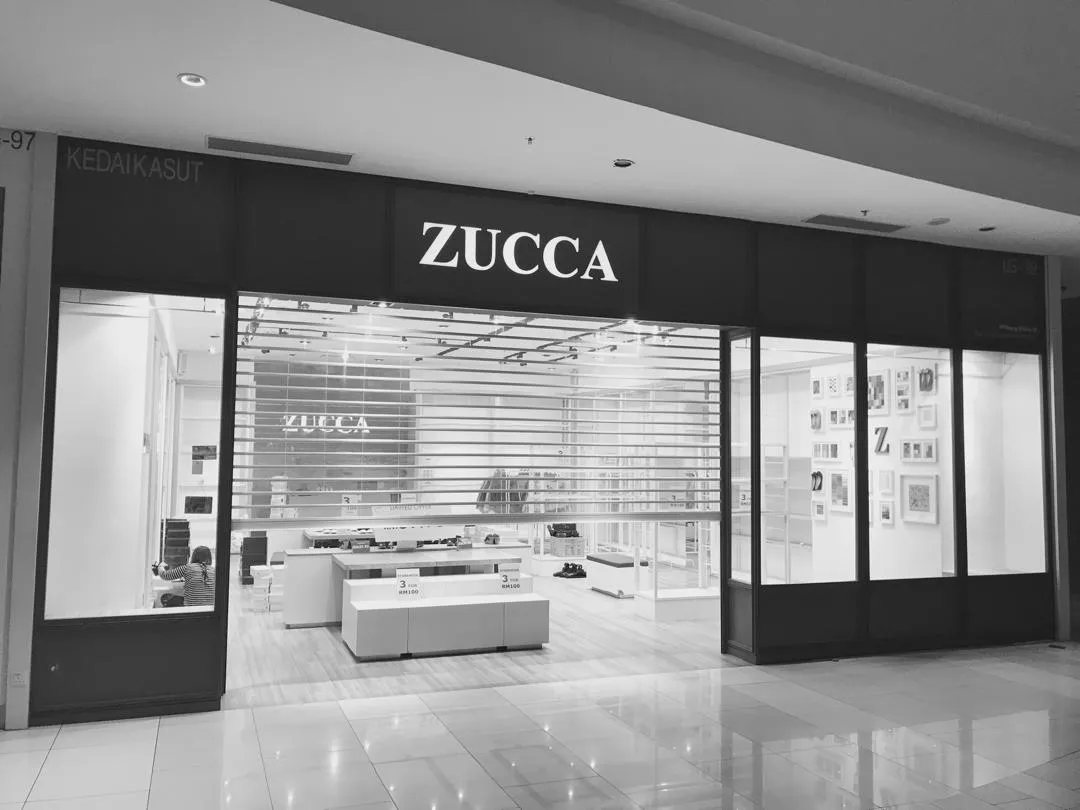
I worked so hard. Why couldn't I make it work?
But the business never took off.
Those years, I worked twelve to fourteen hours almost every day. Opening the store, minding the store, serving customers, cleaning, arranging displays: I did a lot of it with my own hands.
I even felt that if it came to who served customers most seriously, I wouldn't lose to anyone.
And still, the business didn't work.
Slowly, I started to complain.
I felt the market was unfair.
The best spots in shopping malls always went to the big brands first. Small brands like us hardly had a choice.
Our rent was double digits per square foot; big brands might pay single digits. Some malls were even willing to cover their renovation costs.
They had money. They could hire celebrities, do beautiful fit-outs and spend huge marketing budgets. We had to carry everything ourselves.
I started to believe it wasn't that we didn't work hard enough. The market simply never gave small brands a fair chance to compete.
In the end, every store closed.
The two years with nothing
For the next year or two, I didn't really have a stable business. To make a living, I worked as a student agent and drove Uber.
At the same time, my wife and I kept serving some of our old customers and dealing with problems left over from before.
We had no capital and hardly any resources. Every ringgit had to be spent very carefully.
When we ran stores, we were used to deciding what we wanted to sell first, and then figuring out how to sell it to customers.
But during that period, we did the complete opposite.
Whatever customers wanted, we found a way to make.
Because we had no money to waste, we started seriously trying to understand why customers bought, why they didn't, and why they chose others instead of us.
Thinking, testing, adjusting, over and over.
We felt our way like that for about two years.
By the second half of 2019, we had slowly found a formula that worked for us. We were still testing it and didn't dare invest heavily. All I hoped for was to earn enough to put food on the table.
Then, unexpectedly, the pandemic hit in 2020, the online market grew fast, and our business took off with it.
What changed wasn't ability. It was how I thought
Afterwards, I kept thinking about it.
Why, back when I had so many resources, knew supply chain, product and retail, and worked so hard, could I never make it work?
And why, when I had nothing at all, did I slowly find a model that worked?
I realised the biggest change wasn't ability, and it wasn't resources.
It was how I thought and how I acted.
When business was bad before, my first reaction was to blame the market, the rent, the unfair competition.
Those problems were real.
But I overlooked something more important.
I kept proving how hard I worked, but rarely tested seriously whether customers needed what I was doing.
Me thinking a product is good doesn't mean customers think so.
Me thinking a price is fair doesn't mean customers will pay it.
Back when we had capital, a supply chain and inventory, we could keep pouring in more when business was bad, thinking a little more effort would turn things around.
It was only when we had nothing that we started truly studying customers.
If customers didn't buy, we found out why not, and where their money was going instead.
If we thought a product should sell well, we tested it first, rather than putting in more and more money just because we believed in it.
Knowing something isn't the same as making it a business
About two years ago, our own brand hit a ceiling again.
On a friend's advice, we started doing e-commerce operations for other brands, an agency business.
Once again I thought: after so many years in e-commerce, knowing the platforms, ads and livestreaming this well, running e-commerce for other brands shouldn't be too hard, right?
In the end, it took us almost a year to turn that business from loss to profit.
That experience reminded me again how easy it is to assume that because we understand something, we can turn it into a business.
But understanding product doesn't mean understanding customers. Understanding e-commerce doesn't mean knowing how to serve other brands.
The abilities we have are only the starting point of a business. Whether the market needs them is, in the end, for customers to decide.
Looking back at these two experiences recently, I realised what really got me out wasn't some brilliant business model.
It was a habit I gradually built.
When I hit a problem: think first, then test, and fix it if it's wrong, instead of rushing to find excuses.
Markets have cycles. When times are good, they're very good; when they're bad, it really is hard.
We can't control the economic cycle, and we can't ask competitors not to compete.
But we can choose which point of view we take when we face a problem.
From our own point of view, we see how much we've given, how much risk we've carried, how much we've had to swallow.
From the customer's point of view, we see what they need, why they choose us, and what value we've actually created for them.
If I could go back and tell my younger self one thing
Thinking back now to the version of me who closed all those stores, I still feel a little emotional.
Because back then, I really did work hard.
But if I could go back today and tell my younger self one thing, I think I'd say:
You've already worked very hard. But have you ever seriously asked whether what you're working so hard on is what customers actually need?
The market never promised that if we work hard enough, we'll be rewarded.