If concert tickets sell out in seconds, why not play the same city for a month?
Originally written in Chinese. Translated with AI, reviewed by Gary. Read the Chinese original →
My wife doesn't spend much on herself, but she loves concerts. I'm the one who fights for tickets with her every time and goes with her. Every time, I wonder: concert tickets sell out in seconds and demand is this strong, so why don't singers play dozens of shows in the same city, instead of one or two before moving on? From a business point of view, the stage, marketing and venue costs have already been paid. Wouldn't a few more shows make more economic sense?
How does a concert make money?
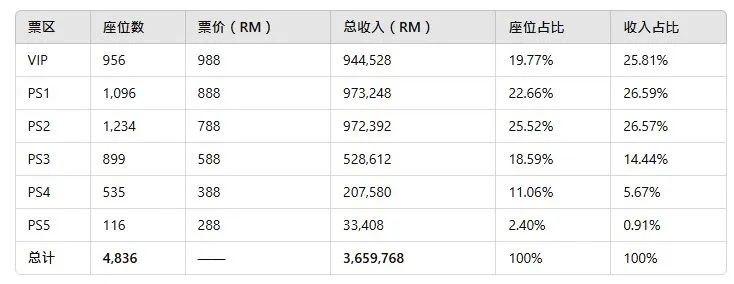
Out of curiosity, I pulled some concert data and used ChatGPT to analyse the seating and sales for A-Lin's upcoming concert at Genting. Genting's Arena is a small-to-mid-sized concert venue with 4,836 seats in total.
The data shows that VIP and PS1, the most expensive seats, bring in 52.4% of the concert's revenue, while the cheapest tier, PS5, contributes the least, under 1% of sales. That says one thing: a concert makes its money from hardcore fans, not from selling cheap tickets to casual audiences.
Scarcity vs. repeat purchase: why not play one city for a month?
Economically, if concerts make money from expensive tickets, why not ride the hype and play 10, 20 shows, or even a whole month, in one city?
The answer lies in the nature of VIP tickets: low repeat purchase, so they need scarcity to hold up.
1. VIP tickets are expensive, but rarely bought twice
- The core VIP buyers are "superfans", willing to pay a high price to be closest to the stage with the best view.
- The catch is that these fans usually don't buy VIP twice on the same tour. Once they've seen it, their need is met.
- So if you play too many shows in one city, VIP demand falls fast and drags down overall sales.
2. Create scarcity, build brand value
- Limiting the number of shows creates a "limited edition" effect that makes fans more determined to grab tickets, building FOMO (fear of missing out).
- That's why tickets for big names like Jay Chou and Mayday are always oversubscribed. They never let supply exceed demand; they stay "scarce" to protect their brand value.
3. Tour across cities to maximise revenue
- Since VIP repeat purchase is low, the best approach isn't many shows in one city, but "changing cities", so fans in different places all get a chance to buy.
- Mayday tours the world, for example, and A-Lin is touring multiple cities this time, not playing 30 nights in Kuala Lumpur.
How does a concert maximise its earnings?
A concert doesn't make money by "selling more seats", but by "selling expensive seats", and keeping those seats in high demand. And how fast my wife grabs tickets decides what a concert is worth.