Speak to AI, read what it writes
Originally written in Chinese. Translated with AI, reviewed by Gary. Read the Chinese original →
Today I went to an in-person event hosted by Ann and n8n, focused on AI automation.
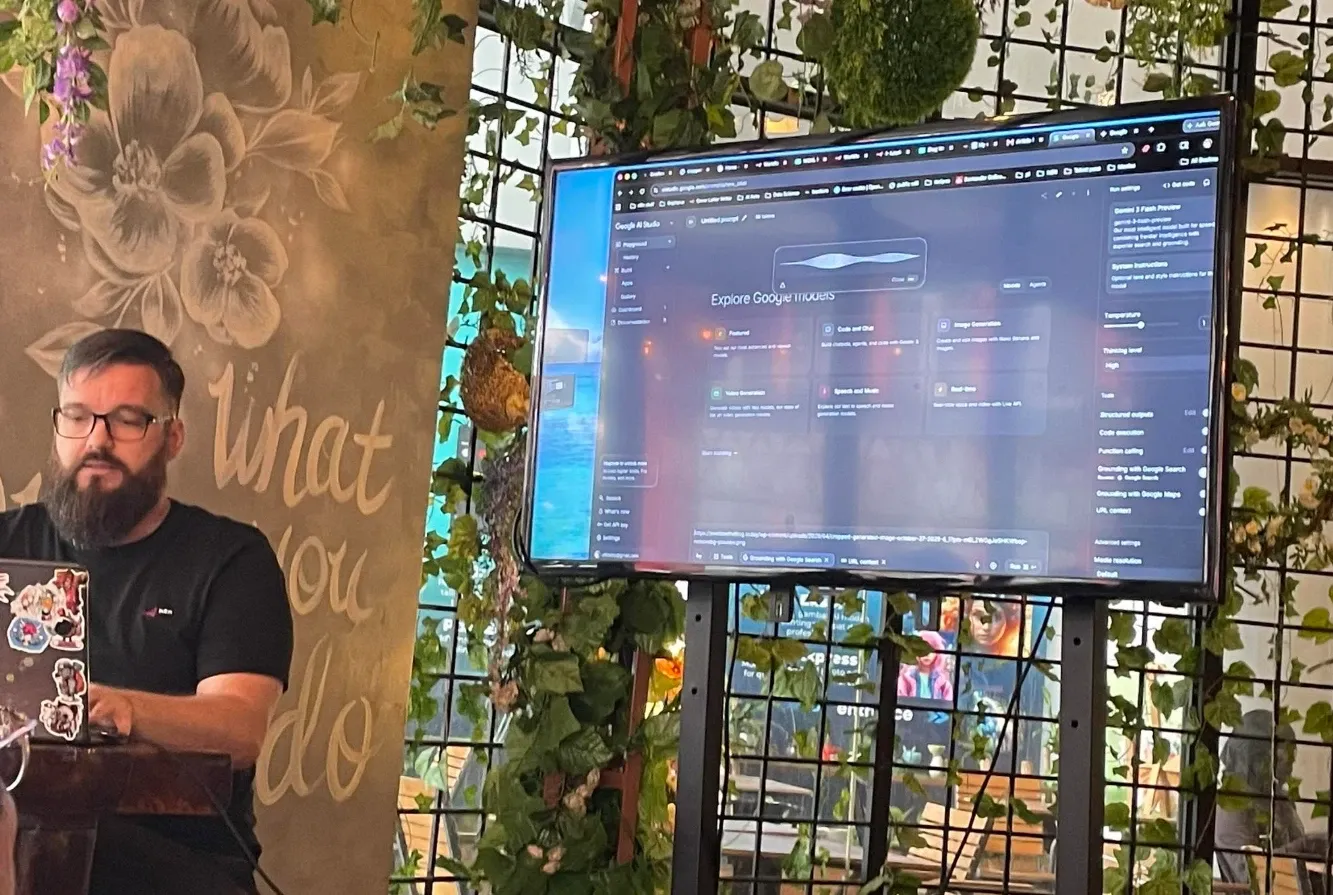
There were of course a lot of impressive talks, and people showed plenty of AI workflows, automations and agents.
But I noticed something very interesting: many people there were talking to AI by voice.
They weren't typing. They were just speaking. Yet when the AI answered, they still read its reply as text.
I found that fascinating.
For most of our time with computers, input and output were both text. Type on a keyboard, read on a screen. Then came the mobile era, and we swiped, tapped and typed with our fingers. But in the AI era, input is becoming more and more natural. And the most natural way of all is simply talking.
Humans weren't born for keyboards.
When we think, our thoughts are often vague, jumpy and not yet organised. Typing gets stuck, because you have to shape the idea into sentences before you can enter it.
Voice is different. You can think while you talk. You can throw out half-formed ideas and let AI organise them. You can even talk to it like an assistant, slowly putting into words things that haven't taken shape in your head yet.
Voice input actually suits AI better.
But interestingly, for output we still prefer to read text.
Because text lets you pause. You can reread it, copy it, edit it, compare it. It can become a document, a brief, a proposal, a caption or a workflow.
Voice is good for expressing ideas. Text is good for keeping them.
It also reminds me of the direction some voice-first AI projects in Silicon Valley are taking. They stress that products in the AI era don't have to make people keep typing. People should be able to say what they think in the most natural way, and let AI turn it into something actionable, readable and organised.
I think the way we interact with many AI products may end up like this:
Speak to input.
Read the output.
Let AI execute.
We used to adapt ourselves to machines, which is why we had to learn keyboards, software and systems.
Now, slowly, machines are adapting to people.
All we have to do is say what we think.
The real change isn't just that AI has got smarter. It's that the way we talk to computers is going back to the most natural way humans communicate.