On investors and fundraising
Originally written in Chinese. Translated with AI, reviewed by Gary. Read the Chinese original →
Today I went to the 投吧!合伙人 (Tou Ba! Partners) investor conference organised by DFCC and MyStartr. I listened to quite a few speakers and ran into many old friends from the startup scene.
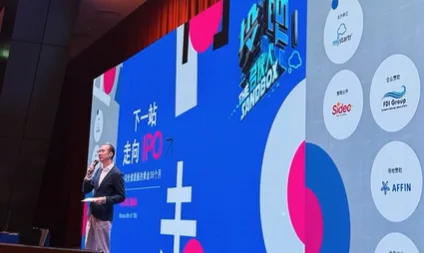
The first time I attended this conference was in 2021.
We were in the middle of an equity crowdfunding (ECF) round, and the money hadn't actually come in yet. It was my first event like this. Seeing so many investors in one room, I thought, this is my chance, and went up to people to chat and introduce my business.
The result, of course: I didn't raise a single sen. 😂
Still, I took a lot away from it. Besides approaching investors, I also shamelessly went up to the speakers afterwards and asked them privately about building a business and raising money.
In the blink of an eye, five years have gone by.
Over those five years I've paid a fair amount of tuition on the fundraising road. From small angel investments to very aggressively approaching venture capital, pitching one firm after another. Some talks went very deep, and in the end we decided not to take the money because the valuation and terms weren't right. Later I tried debt financing, dealing with banks and financial institutions, and worked with financial advisors (FAs). I even once paid an FA, the deal never happened, and I never got the money back.
Sitting in the investor conference again today, it felt very different from five years ago.
One of the most discussed topics today was LEAP Market 2.0. With capital market reforms, more companies may get the chance to enter the public market. There was also talk of share price performance after IPO, corporate governance, internal control and compliance requirements.
All of that matters. But listening to it, I was also thinking about what I've been through on the fundraising road these five years, and there are a few lessons I'd like to share.
First, why do you actually need the money?
We often hear people talk about raising funds, finding investors, pushing up the valuation and preparing for IPO, as if raising money means the company has succeeded.
But fundraising itself shouldn't be the goal of building a business.
What matters most is still what problem your company is solving. What market opportunity do you see? What value do you want to create? Only then should you think about what resources you need, and what kind of money you should use.
Not all money is suited to solving the same kind of problem.
If you're doing R&D, developing new technology, or working on projects that may not pay back in the short term, equity financing may be more suitable. But if the business already has steady orders and healthy margins, and just needs working capital for inventory and turnover, then as long as cash flow can carry the repayments, debt financing, inventory financing or even supplier credit terms may fit better.
In our apparel retail business, what we often need is inventory and working capital. Sometimes partnering with players upstream or downstream in the industry helps more than finding a VC who doesn't know retail at all.
Of course, companies at different stages suit different capital structures. Equity isn't free money either: what you sell is part of the company and its future value. So before raising, it's best to be clear about what you actually need.
Second, don't build the company's survival on fundraising having to succeed
I used to chase VCs very actively, and even tried cold messaging investors on LinkedIn one by one, sending introductions and asking for meetings. Occasionally someone was willing to talk, but more often there was no reply, or nothing came of the conversation.
Early on, that was genuinely discouraging.
Later I changed my thinking. For a business that already has revenue and a proven model, the healthier situation is that even if no investor will back you today, the business can keep running and eventually generate positive cash flow.
Of course, some technology and R&D companies need long-term capital, so this doesn't apply to everyone.
But if your business can survive on its own, and fundraising is only about growing faster, you negotiate with investors from a completely different footing.
If you want to invest, let's build this bigger and faster together. If you'd rather not for now, that's fine too. I'll keep running the business well and update you in a while.
That confidence doesn't come from how beautiful your pitch deck is, or how high a valuation you ask for.
It comes from the business itself.
Third, don't take an investor's rejection as a rejection of you
When some founders get turned down, they think the investor looks down on them, doesn't understand the industry, or simply has no vision.
I think that mindset is dangerous.
An investor might pass for many reasons. Your company doesn't fit their investment mandate, the fund is almost fully deployed, they don't agree with the valuation, or of course your business model really does have a problem.
Whatever the reason, there's no need to damage the relationship over one rejection.
Founders still need to stay humble. Not investing today doesn't mean they won't invest next round. Even if they're not the right shareholder, they might introduce customers, suppliers or other investors.
Especially with equity financing, I think the investor relationship is a bit like a marriage.
Many founders think: raise this round, grow the company over the next five years, then let the investors exit. But reality is rarely that fast. Five, seven, eight, even more than ten years isn't unusual, and many companies fail along the way.
So taking equity investment means inviting someone onto the company's journey for many years. Choosing your investors matters as much as investors choosing you.
Besides money, what else can they bring?
Some investors have industry backgrounds and can connect you to the supply chain upstream and downstream. Some know many corporate customers and can introduce business. Some have deep management experience and can help the company build a more mature organisation and governance.
Those resources are sometimes worth more than money landing in your bank account.
A lunch at a mamak stall
But there's another kind of value that many people never mention in a pitch deck.
When you hit hard times running a business, some investors can help pull you through mentally.
I remember something that happened a few years ago.
The company was going through a very difficult period. We faced a lot of problems, and I was extremely anxious and felt helpless. I happened to reach a very experienced investor, who was also a shareholder, and asked if he had time to meet.
I ended up buying him lunch at a mamak stall downstairs from his office.
There was no particular agenda that day, and we weren't talking about fundraising. I just really wanted to ask him one question.
I asked: you've been through so much. When life hands you a huge difficulty, even a problem you can't solve for now, how do you face it?
I expected him to share some business strategy, a management method, or some profound life lesson.
He didn't.
Instead he shared something personal. Someone close to him had been ill at the time, it was a very hard situation, and he didn't know how to solve it.
He said that during that period, he couldn't make the problem in front of him get better right away. What he could do was try everything to live as normal a life as possible.
That was it.
Sounds ordinary, doesn't it?
But I remember sitting at that mamak stall listening to him, and for me at that time, it hit very hard.
Because when you're stuck in difficulty, it's easy to feel every problem must be solved immediately. You wake up every day thinking about how to fix things, and when you can't, you keep worrying, until slowly even your own life is affected.
But some things really don't get an answer tomorrow just because you try a bit harder today.
Sometimes all you can do is live your life well first, and handle what's in front of you. The things you can't solve yet need a little time.
After that lunch, the company's problems obviously didn't suddenly disappear. But the way I looked at them did start to change.
Six months passed, a year, two years. Some problems were slowly solved, and some things slowly got better.
Looking back, that investor didn't give me any money that day, and didn't solve any business problem for me. He just shared a piece of his own life.
But for me at that time, it may have been one of the most valuable kinds of help I've ever had from an investor.
Five years later
Over the years I've met quite a few people like that. Some gave me business advice, some introduced resources, and some were willing to sit down and listen to me for a while when the company was struggling.
A lot of what they shared might not sound special on an ordinary day. But when you happen to be at a certain stage, facing certain difficulties, the same sentence can make you see a problem from another angle.
Five years ago at my first investor conference, all I could think about was how to find investors and how to convince them to invest in my company.
Coming back five years later, of course I still care about fundraising, IPOs, valuation and all the different financing tools. But after these years, I've slowly realised that managing investor relationships isn't only about raising money. It's about building trust between people.
Some invested, some didn't. Some relationships faded after one round, while some people stayed in touch. Looking back, the people who influenced me most weren't necessarily the ones who actually put money in.
Like the investor who had lunch with me at that mamak stall.
After the meal, I still had to go back and face the company's problems. He didn't solve anything for me, and I didn't suddenly figure everything out.
It's just that afterwards, whenever I hit a difficult stretch, I'd sometimes think back to what he told me.
Funny, really.
Five years ago, I walked into the investor conference hoping most of all that someone would put money into my company.
Five years later, many of the funding meetings, numbers and terms that felt so important back then have faded from memory.
But that ordinary lunch, I still remember today.