A rack of Italy 90 at Cotton On: how late can I decide?
Originally written in Chinese. Translated with AI, reviewed by Gary. Read the Chinese original →
I went shopping at the weekend, and as I passed Cotton On I saw a pile of clothes on clearance in front of the cashier.
I didn't pay much attention at first. Up close, I saw it was the FIFA World Cup collection they'd launched earlier.
So I had a quick look.
USA: hardly any left.
France 98: mostly sold, with many sizes gone.
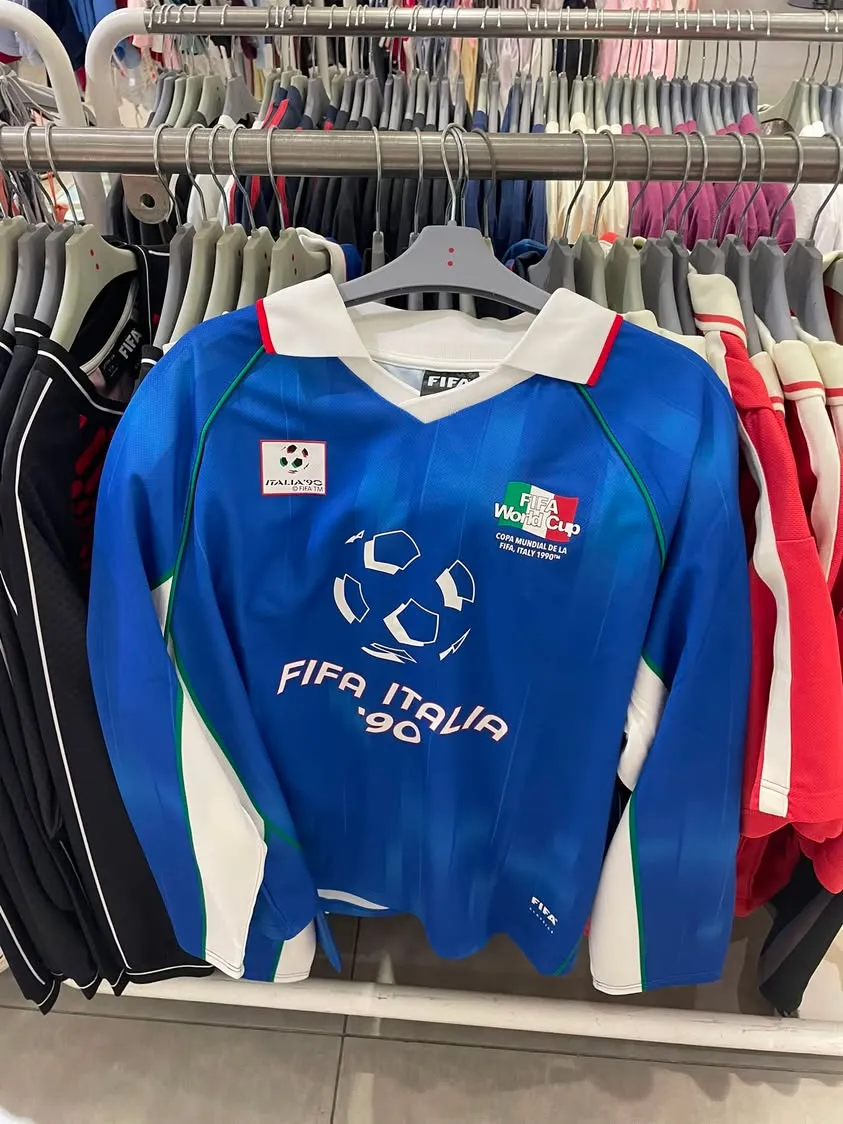
And then I saw a big pile of Italy 90.
The design was actually quite nice, bringing back elements of the 1990 World Cup in Italy as a retro jersey.
The problem:
Italy didn't even make it to the World Cup this year.
Even more interesting, the Italy section had a full size run.
S, M, L, XL, all still there.
After years in fashion, my first reaction to something like this is no longer "is this shirt nice?" but:
That buyer must have a headache.
The real mistake isn't picking the wrong country
But you can't entirely blame the buyer.
There's actually a very interesting merchandising problem here.
The 2026 World Cup started in June, but Italy only officially missed out after the European play-offs in March.
Here's the problem.
A fashion retailer as big as Cotton On can't wait until March to decide whether to do a World Cup collection.
FIFA licensing has to be negotiated, designs made, samples approved, factory slots booked, then production, shipping, distribution, and finally stock laid out in stores across different countries.
So a lot of merchandise planning probably started six months, even a year, earlier.
When the buyer decided to do Italy 90, Italy hadn't been knocked out yet.
And from where they stood at the time, it was arguably the right call.
Italy are four-time world champions with a strong football culture, Italy 90 is a classic tournament, and retro football jerseys have been in fashion for years.
France 98 works. USA works. Why not Italy 90?
The real mistake in this case isn't:
Why did the buyer pick Italy?
It's:
Why commit so much inventory so early, before the outcome was known?
Those are two very different questions.
Traditional fashion buying is largely forecasting.
A buyer sits in the office today guessing what will be in fashion six months from now, which colours will sell and which countries will be popular, makes a forecast based on last season's sales, historical data and their own experience, then places the PO.
The problem is that information now changes far faster than a traditional supply chain.
Italy was only confirmed out in March, and the World Cup started in June.
In just three months, consumer demand for the same shirt can be completely different.
France is playing in the World Cup, so every match, every goal and every news story is free marketing for the France 98 retro jersey.
USA goes without saying: as host country, it carries huge emotion and attention.
But once Italy is out, the shirt hasn't changed, the design hasn't changed, the FIFA logo hasn't changed.
Customers have simply lost a reason to buy it right now.
The cost of being wrong
An important thing for fashion retail in future may not be making forecasts more and more accurate.
It's rethinking:
Can we avoid deciding so early?
For a World Cup collection, design can start a year ahead, licences can be negotiated first, fabric can be locked in, samples prepared, even factory capacity reserved in advance.
But the inventory doesn't all have to be produced at once.
For countries already qualified with big fan bases, buy deep.
For traditional powerhouses that haven't qualified yet, start with a small buy.
Once qualification is confirmed, decide which styles to chase based on search, social media, pre-orders and store sell-through.
Producing later might cost RM3 more per piece. Shipping might cost a bit more. You might even need air freight.
To a traditional buyer, the gross margin won't look as pretty.
But I think today we should calculate one more number:
The cost of being wrong.
A shirt produced six months ahead costs RM30. Produced after demand is confirmed, it might cost RM35.
RM30 looks cheaper.
But if that RM30 shirt ends up in clearance at RM19.90, the RM35 one may actually be the cheaper supply chain.
An important value of future supply chains isn't just being cheap. It's being flexible.
Supply chains used to ask:
How cheap can I produce?
Increasingly, they should ask:
How late can I decide?
Because the later you decide, the more information you have.
And information itself has value.
Three months ago, you didn't know whether Italy would make the World Cup. Three months later, you do.
A week ago, you didn't know which style would take off. A week later, you can see the sell-through.
Today, search volume, TikTok content, Google Trends, marketplace conversion and live-streaming data can all become real-time demand signals.
The real problem is that our information is already in 2026, while many companies' merchandising systems are still at "hold a planning meeting a year ahead and guess what customers will want a year later".
From "now I know" to "I can change the decision"
That may be what's most worth thinking about.
A great buyer used to be someone who guessed well.
Someone who could tell you six months ahead: "This one will blow up."
A great retail company in future, I think, doesn't need to guess right every time.
What it really needs is:
Small bet → observe → update → chase winners → cut losers.
Bet a little first.
When the market gives you new information, adjust.
If it sells well, chase it immediately.
If it doesn't, stop immediately.
Because in business we can never predict everything.
Italy are four-time world champions. A year ago, who would have dared tell you with total certainty that they wouldn't make the World Cup?
So the real question was never:
How can we predict the future better?
It's:
How can we build a business that can react faster when the future turns out differently?
That rack of Italy 90 at Cotton On last weekend is a good reminder.
It isn't just a pile of unsold shirts.
It's more like a forecast error report left behind by a traditional merchandising model.
In an age when information is ever more immediate, what companies really need to shorten may no longer be just production lead time.
It's the time between "now I know" and "I can change my decision".