Grass between the tiles: the compounding of choices
Originally written in Chinese. Translated with AI, reviewed by Gary. Read the Chinese original →
This morning on the balcony, I happened to notice a small blade of grass that had somehow grown out of the gap between two tiles.
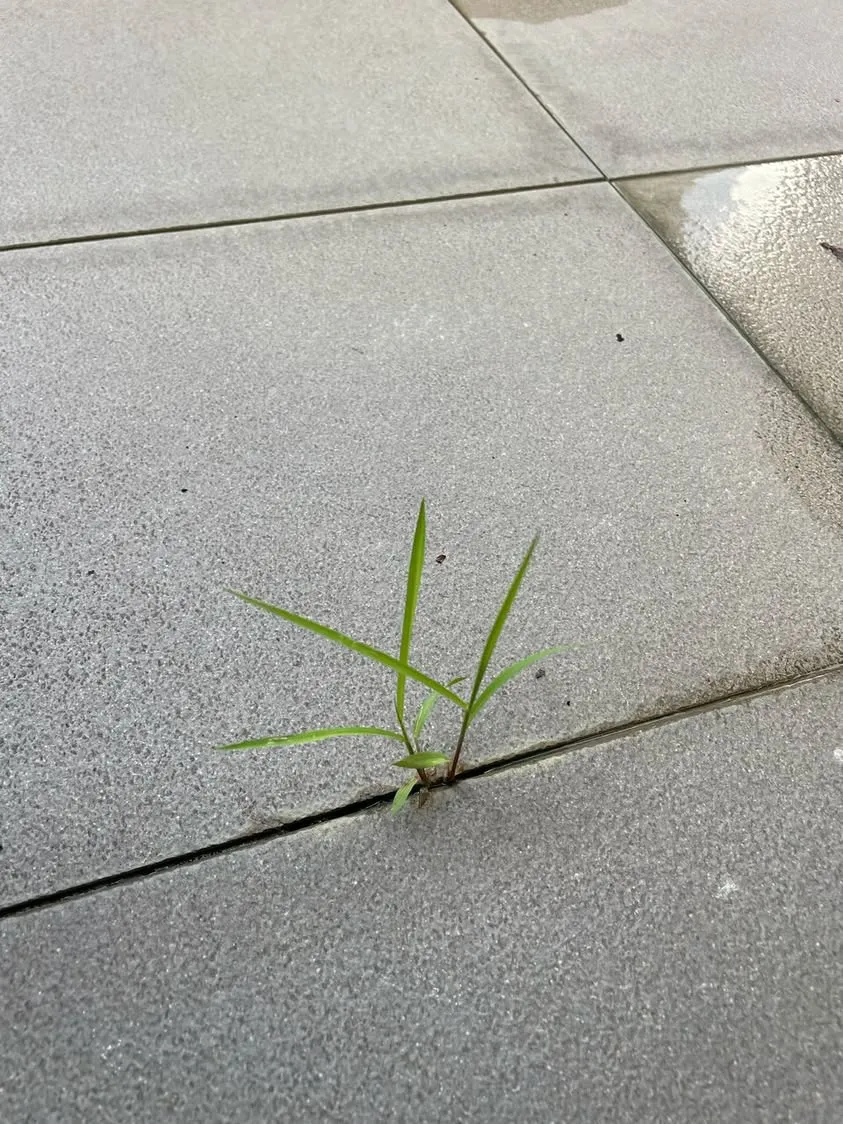
It reminded me of an article by Lao Yu: whatever you once missed, whatever you once got wrong, looking back no longer means anything. Life's choices were never about "do you regret it", but "from now on, how will you walk".
We often feel some options were once worth 80 or 90 points, and can't help regretting: if I'd taken the other path back then, would everything be different? But at this point in time, those options no longer exist.
Sunk costs can't be carried into a new decision. Again and again, we have to return to "the starting point of choice", face the options that actually exist, calmly lay out the cards in our hand, and however low the scores and however bad the situation, rationally pick the card with the highest value.
Even if you only hold two cards, one worth 3 and one worth 5, and neither looks great, you still have to rationally pick the 5. Each time you do this may not change anything right away, but once you've kept at it enough times, the direction changes and your fate shifts. It isn't a miracle. It's the compounding of choices.
Many people think what decides our fate are the "big choices": whether to start a business, whether to marry, whether to move to another city. But what really shapes how our lives look are the small daily decisions that often seem to make no difference: whether to work properly today, whether to face reality this time, whether to carefully score the cards and pick the next one.
Like that grass: keep sowing in different places, and as soon as it meets a little nourishment, it grows.