You can sell your company, but you can't stop being yourself
Originally written in Chinese. Translated with AI, reviewed by Gary. Read the Chinese original →
Today at ZARA I saw this on the back of a perfume box:
A collection created by Ms. Jo Malone CBE, founder of Jo Loves.
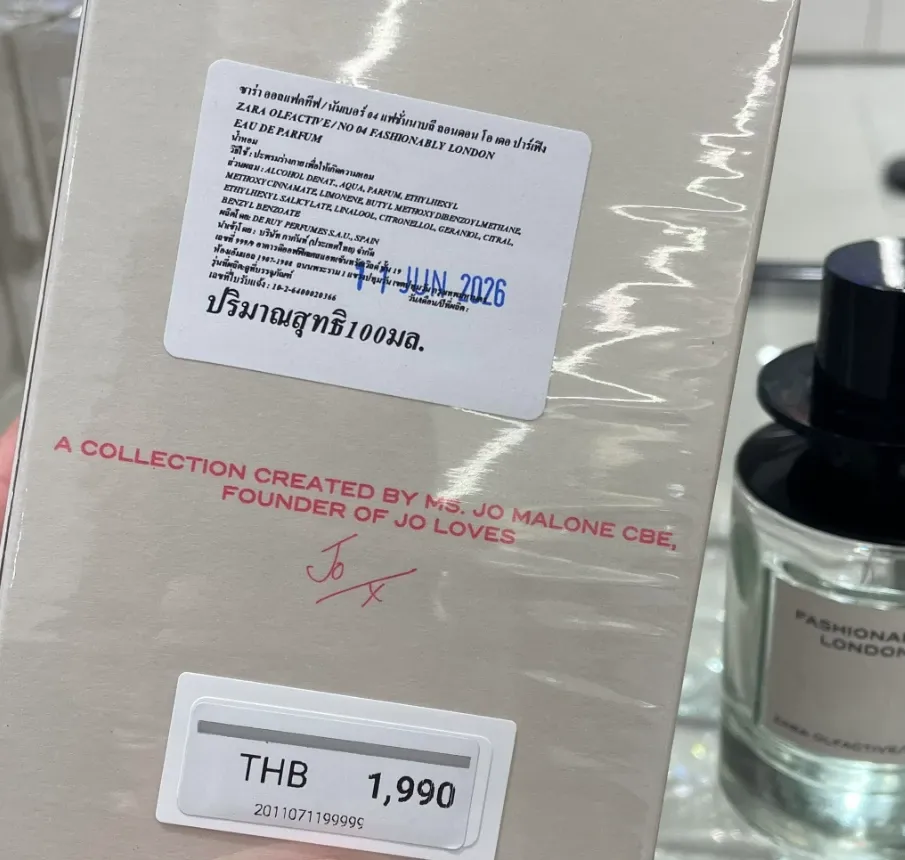
If you buy perfume, your first reaction to the words Jo Malone is probably:
Huh? Isn't Jo Malone expensive? Why is it at ZARA?
There is actually a rather special story behind it.
Jo Malone is the founder of Jo Malone London. She later sold the brand to Estée Lauder, which also meant selling the commercial right to use the name "Jo Malone" for fragrance.
That's where it gets interesting.
Because Jo Malone isn't an ordinary name.
It's a brand, and it's also her.
Later she went through a very serious illness, and she also left the company. After recovering, she came back to perfume, but she could no longer use the Jo Malone London name, so she started another brand called Jo Loves.
The name is actually very clever.
If she can't be Jo Malone,
then she'll be Jo Loves.
Roughly meaning:
I'm still that Jo,
I still love perfume,
only that London isn't mine any more.
Later ZARA approached her to collaborate on a more affordable fragrance line. For customers, that is very appealing.
Because many people love the scent of Jo Malone, but not everyone wants to spend hundreds on a bottle of perfume.
Now ZARA is telling you: don't worry, it's cheaper here, and we've got Jo too.
And that's when things got interesting.
The packaging says "Created by Ms. Jo Malone CBE, founder of Jo Loves". Estée Lauder felt this would confuse customers into thinking the ZARA perfume was connected to Jo Malone London, and so there was a lawsuit.
What's really interesting here isn't whether the perfume smells good, or whether ZARA is cheaper.
The real question is:
After a founder sells a brand named after themselves, can they still use their own name?
From a business point of view, the buyer naturally feels: I paid for this brand, I paid for this name, and this name is an asset.
But from the founder's point of view, it's a little cruel.
Because a name isn't a logo.
A name isn't packaging.
A name isn't a slogan either.
A name is the person.
You can sell your company. But you can't stop being yourself.
This is something many founders easily overlook.
When we build a business, we think about sales, cash flow, growth, fundraising and the exit. Only when we actually sign the contract do we discover that some things, once sold, aren't just a business matter. They are a matter of identity.
What you sell may not just be a company. You may also be selling the way people will know you in future.
In the end, a brand's most valuable asset isn't the product itself, but the perception in customers' minds.
And once that perception is written into a contract, it becomes an asset, a right, and a boundary.
Still, at the end of the day, for a straightforward guy like me, it can be very simple.
If I see a perfume at ZARA that says it was created by Jo Malone, at a ZARA price?
Of course I'm buying the ZARA one.