What is actually going on with the economy?
Originally written in Chinese. Translated with AI, reviewed by Gary. Read the Chinese original →
It's 11.11 again.
After a busy day, looking back, so much has happened this year. So much that sometimes I don't even know where to start.
It used to be that when something big happened, society might talk about it for months, even years. Now it feels different. Whatever happens, after a week or two, everyone has moved on to the next thing.
The whole world is changing too fast.
Not a recession, but some kind of crisis
Not long ago, I met my mentor about something.
He has lived through quite a few economic cycles. As we chatted, we talked about how hard business is right now.
So I asked him: you've been through so many ups and downs, do you think this is a recession?
He said he actually doesn't think it's a recession.
People are still spending, the overall economy is still growing, and everything seems more or less normal.
But then he said something that stayed with me.
He said that although it isn't a recession, he feels there really is some kind of crisis in the market.
I asked him what kind of crisis.
He didn't give a clear answer. Based only on the cycles he'd lived through, he sensed some unusual things happening in the market.
That made me think for a long time.
Why do profitable companies keep borrowing?
AI has been developing very fast. The big tech companies keep pouring huge sums into building data centres. Even a company as profitable as Google's parent Alphabet posted negative quarterly free cash flow this year, partly because of its massive capital spending.
A while ago I also chatted with an old classmate who works at one of the Big Four.
He said the private credit market is very active right now, and that financing work is doing very well.
That made me curious.
Why do so many large companies that are clearly doing well, some of them extremely profitable, still need to keep borrowing to fund their expansion?
Of course, companies borrowing money is perfectly normal. There are many ways to raise money, and sometimes debt makes more sense than issuing new shares.
But if a whole market is using money borrowed today to invest in an industry everyone believes will grow fast in the future, then a large part of the risk is riding on that future growth actually arriving.
If the growth doesn't come, but the debt is already there, what happens?
Especially with AI.
I've always believed AI will keep getting better.
Just from my own daily experience using it, I know it really does create value. So even when people say AI is a bubble, I don't think OpenAI, Google or other AI companies will necessarily fail because of it.
But I think we often confuse technological success with commercial success.
They're actually two different things.
Circular financing in AI
In October 2026, the IMF published a report that specifically highlighted circular financing in the AI industry.
It analysed 14 publicly disclosed deals, involving about US$300 billion in equity investment, US$650 billion in debt, and US$1.4 trillion in future revenue commitments.
Those are really big numbers.
Put simply: Company A invests in Company B, and B uses that money to buy compute or other services from A.
A books revenue from it, and B keeps raising money and expanding based on its expected future growth.
Of course, these are all real business transactions, and it doesn't mean this kind of financing is necessarily a problem.
But in the end, the whole ecosystem still has to answer one question.
Are there enough end customers willing to keep paying for these AI services?
If there are, the business model has a chance to keep going.
If not?
A 30% or 40% fall in the stock market won't necessarily cause a recession.
But if much of the investment is backed by debt, it's a different story.
When returns fall short, lenders start tightening credit, companies struggle to raise money and are forced to cut investment and lay people off, and that hits consumption. What started as a capital-market problem can slowly spread into the real economy.
That's what I think is really worth worrying about.
2027 to 2029 may be challenging years.
But will there be a global financial crisis like 2008?
I don't know.
And I don't think that even a capital crisis in AI would mean the technology stops developing.
When the dot-com bubble burst in 2000, the internet didn't disappear.
After the iPhone arrived in 2007, the mobile internet went on to create a whole new consumer ecosystem.
AI today may follow the same logic.
A technology can be hugely successful, used by more and more people at lower and lower cost, while the companies investing in it don't necessarily all make money.
Sometimes it's precisely because a technology is so promising that the market becomes overly optimistic about it.
Buffett's best investment
This reminded me of something Warren Buffett once shared.
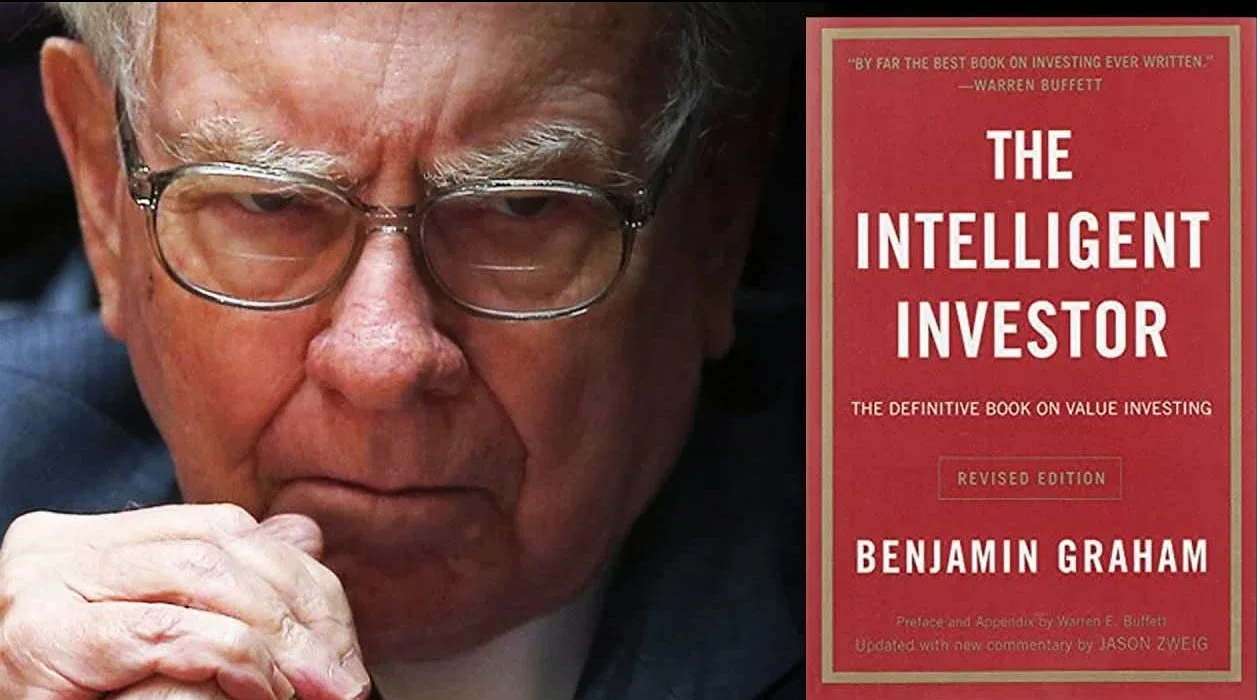
He said the best investment he ever made wasn't buying any particular stock, or investing in some company that later made a lot of money.
It was buying a book by Benjamin Graham, The Intelligent Investor, when he was nineteen.
He doesn't even remember how much he paid for it.
But the book changed how he understood investing, and shaped his investment decisions for decades afterwards.
I find that story really interesting.
Because the book didn't tell Buffett which year a financial crisis would hit, which year the market would soar, or which company would succeed.
What it gave him was a way of understanding investing and making decisions.
That approach didn't require him to predict the market correctly every time, but it helped him keep making sound judgments in every kind of economic environment.
Running a company is the same
Building a business is actually the same.
In the past few years, I've been through quite a lot. Some decisions were right, some were wrong. Some things I felt sure about turned out completely different from what I imagined.
I used to think that if I worked hard enough and studied the market well, I could tell what would happen next.
But the more I've been through, the more I find that the market often changes far faster than we can predict.
And running a company these past few years has made me feel more and more that what's truly hard isn't only growing when the market is good, but whether you can keep going when the market falls short of expectations.
We can believe in an industry's future, but we also have to face our company's reality today.
No matter how big the future opportunity, if your cash flow can't last until that day, none of it matters.
So rather than keep guessing when the next crisis will come, I care more about what logic we actually run our company by.
What value do we believe we can create for customers? How much risk are we willing to take? What's worth holding on to, and what has to change?
Of course, conviction isn't stubbornness.
When a judgment is wrong, we should admit it. When the way we operate isn't working, we should adjust.
A good market doesn't mean every decision we make is right. A bad market doesn't mean everything we believed was wrong.
I don't know when the next crisis will come.
But I feel more and more that the most important skill in running a company isn't predicting the future accurately, but still being able to make sound decisions when you can't predict it.
So that even when you get it wrong, you still have a chance to keep going.